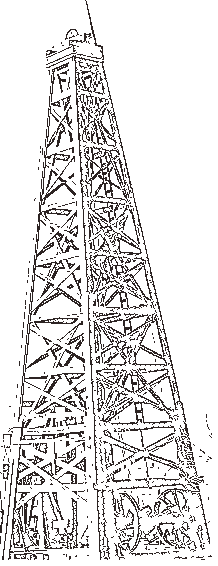
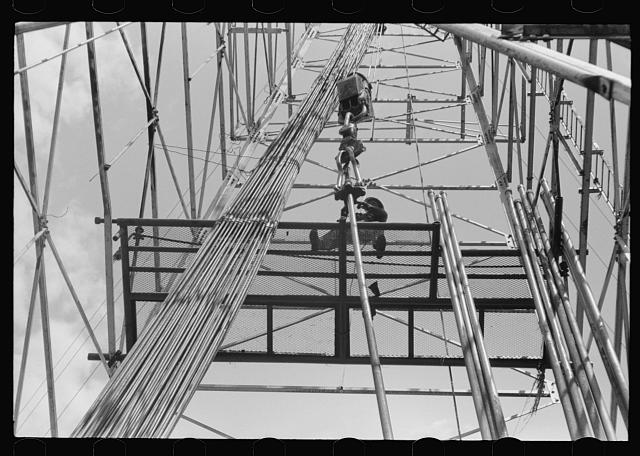
Oklahoma Roughneck is named for the drilling crews. On a rig, a roughneck is one of the people on the floor. They handle the pipe and the tongs, make up and break out the joints, and trip the string in and out of the hole. The driller runs the brake. The name is the job. It comes from the rough work, not from a company.
The big early field was Glenn Pool. On November 22, 1905, Robert Galbreath and Frank Chesley brought in the Ida Glenn No. 1 on the allotment of Ida E. Glenn, in the Creek Nation near Kiefer. The wells that followed were called Glenn Pool. Oil moved out by pipeline and rail, and Tulsa grew into a supply town and an office town for the fields.
In March 1912 Tom Slick brought in the Wheeler No. 1 near Cushing. That well opened the Cushing field. Drumright and the leases around it filled with derricks. By the middle of the 1910s the field was among the largest producers in the country.
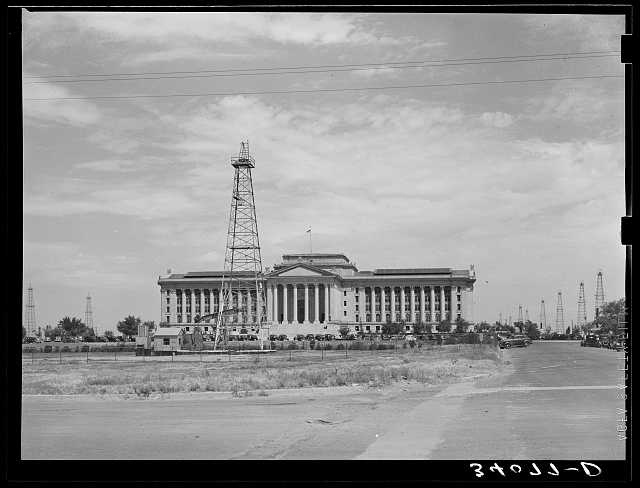
The Oklahoma City field came later. On December 4, 1928, the Indian Territory Illuminating Oil Company and Foster Petroleum brought in Oklahoma City No. 1, south of town. The pool ran under the city. On March 26, 1930, the Mary Sudik No. 1 blew out, and it was not capped until April 6. Newspapers called it Wild Mary Sudik. Derricks went up around the State Capitol. A well was later drilled on the capitol grounds themselves.
The certificate is a commemorative title for that work. It confers no mineral right, no lease, and no office.